.jpg)
Urban.Science
Topic 5
"What does urban living look like in times of climate change - and what can we do for more solidarity and a good life here, but also in the global south? This is what drives me in my research."
Prof. Dr. Michael Janoschka
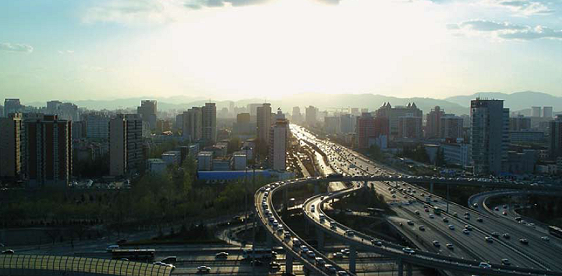
Cities are key arenas for climate and resource transformation. They are where the energy and mobility transitions, climate adaptation, land-use competition, housing challenges, infrastructure renewal, and social inequalities converge. At the same time, cities foster new forms of coexistence, participation, and sustainable urban development. The Urban Research Topic at KIT brings together expertise from across disciplines to better understand these transformation processes, critically analyze them, and develop practical solutions in collaboration with stakeholders from policy, industry, and civil society.
The Topic focuses on the interactions between the built environment, technical infrastructures, natural resources, and societal dynamics. Researchers investigate how cities can become more climate-resilient, resource-efficient, socially equitable, and livable. Key areas of research include heat-adapted urban development, blue-green infrastructure, energy-efficient building renovation, circular construction, sustainable mobility, digital urban models, and innovative forms of urban governance.
A defining feature of the Topic is the close integration of fundamental research, applied research, and transdisciplinary approaches. Urban districts are viewed as living laboratories where scientific knowledge, municipal planning, civic engagement, and technological innovation come together. Real-world laboratories, urban demonstrators, digital observation infrastructures, and collaborative participation formats create interfaces between research, public administration, industry, and urban society.
The Urban Research Topic combines perspectives from architecture, civil engineering, regional science, geography, geosciences, environmental research, meteorology, computer science, and technology assessment. This interdisciplinary collaboration enables integrated approaches to the transformation of urban spaces—from analyzing complex urban systems to developing practical solutions for climate-resilient, resource-efficient, and socially sustainable cities.
_rdax_1200x800s.jpg)

_rdax_1200x960s.jpg)
How nocturnal cold air flows cool cities
only available in German
Dieser TV-Beitrag wurde in der Wissenschaftssendung „W wie Wissen“ (ARD) ausgestrahlt. Er befasst sich mit nächtlichen Kaltluftströmungen die in relativ windstillen und wolkenfreien Sommernächten auftreten. Dabei fließt kältere Luft aus dem Umland in das Stadtgebiet hinein und sorgt für eine willkommene Abkühlung der sich tagsüber aufheizenden Stadt.
Am Beispiel von Untersuchungen für die Stadt Mannheim wird erläutert, wie durch eine überlegte Bebauung und der Anordnung von Freiflächen, Korridore für das Einfließen der Kaltluft geschaffen werden können, sodass die nächtliche Abkühlung möglichst vielen Stadtbewohnern zugutekommt.
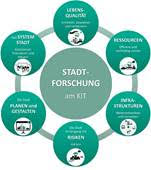
more about KIT Urban Research
An Overview of KIT Urban Research
link
ESKP Thematic Special "Metropolises Under Pressure"
more info: https://www.urban.kit.edu/english/index.php
Prof. Dr. Michael Janoschka
Spokesperson Topic Urban.Science
Spokesperson Topic Urban.Science
 +49 721 608-46335
 michael janoschka ∂does-not-exist.kit edu
Institute for Regional Science
Karlsruhe Institute of Technology
Building 10.50
Reinhard-Baumeister-Platz 1
76131 Karlsruhe
Germany
Prof. Dr.-Ing. Frank Dehn
Deputy Spokesperson Topic Urban.Science
Deputy Spokesperson Topic Urban.Science
+49 721 608 43890frank dehn ∂does-not-exist.kit edu
Institute of Concrete Structures and Building Materials (IMB)
Materials Testing and Research Institute, MPA Karlsruhe
Competence Center for Material Moisture, CMM Karlsruhe
Karlsruhe Institute of Technology
Bldg. 50.31
Gotthard-Franz-Str. 3
76131 Karlsruhe